
Q. How do Bajau people's spleens help them stay under water for a long time?

The Procrastiwriter
How do Bajau people's spleens help them stay under water for a long time?
They are “sea nomads” living on the coasts of Indonesia and Malaysia. They build their homes on stilts on the coast. They use a wooden spear and net when diving, and childern learn to catch fish at an early age. They can dive to a depth of 60 meters and others last longer that three minutes. 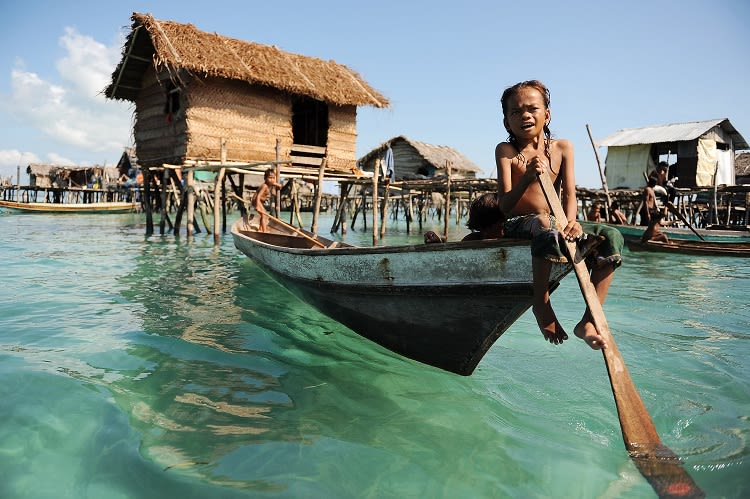
4 Answers
Bajau’s people spleen are unusually large spleens are the result of a genetic mutation, and not a lifestyle-related phenomenon. It’s a rare example of natural selection at work on modern humans, and the new insights gleaned from this research could lead to new treatments for respiratory disorders.
At first glance, the spleen doesn’t seem a likely organ to help us hold our breath. Its primary functions are to filter blood as part of the immune system, fight bacteria, and to recycle red blood cells. But it also plays an important role during acute oxygen shortage, i.e. when we hold our breath for an extended period of time. When breathing stops, our bodies trigger a series of physiological changes: our heart rate slows down, the blood vessels in our extremities constrict, and our spleen shrinks down in size. When the spleen contracts like this, it releases oxygenated red blood cells, which provides an extra supply of oxygen to the bloodstream. The bigger the spleen, the greater amounts of freshly oxygenated blood.Figuring this was a clue to extraordinary breath-holding ability …to measure the size of Bajau spleens. It was weird. It is larger in Bajau’s people.but spleen sizes among diving and non-diving Bajau individuals did not vary in size, which suggested something else was going on. Something a bit more genetic. Thats the very interesting point to think.
Accordingly, and for the next stage of the study, the researchers conducted a genetic analysis. They uncovered over two dozen genetic mutations, or variants, among the Bajau people that were distinct when compared to two other populations, the Saluan and the Han Chinese. One marker, a gene known as PDE10A, was associated with the enlarged spleen. Scientists who work on mice are quite familiar with this gene, as it regulates the thyroid hormone that controls the size of, you guessed it, the spleen.
Importantly, spleen size isn’t the be-all and end-all of extended breath-holding abilities. Divers use many techniques to prolong their stints underwater, which could also explain the remarkable abilities of Bajua divers. Still, it’s an intriguing finding.
“Overall, our results suggest that the Bajau have undergone unique adaptations associated with spleen size and the diving response, adding new examples to the list of remarkable genetic adaptations humans have experienced in recent evolutionary history,” conclude the authors in their study.
Result of mutation and natural selection both have their inportant role according to their lifestyle.
answered by pearljam

Indeed as mentioned above, it is the spleen that will provide more oxygen. This however is through the injection of extra blood which is stored in this organ. the blood will carry th oxygen and make sure that more oxygen can be taken up when surfacing.
I am not sure whether it is a mutation that is the cause of this enlarged spleen. It is believed that the spleen is a remnant of our distant past when we had to deliver intense performances. Over time and as the need became less pressing, the spleen started to become smaller and smaller to the poin where it is almost absolete. the alternative hypothesis therefore is that in most human populations, mutations were not selected for and spleen size became smaller, whereas in this population, selection was maintained and therefore, deleterious mutations (leading to smaller spleens) were weeded out.
Our spleens still function, they carry a lot of blood and when engaging in intense sport, you can actually feel it contracting (it is a bit painful).
answered by huitemae

THEY CAN STAY UNDERWATER FOR LONG TIME BECAUSE THEY HAVE BECOME HABITANT TO THAT, WHERE EVER A CHILD IS GROWN HE BECOMES HABITANT TO THAT PLACE, SO THATS NOTHING NEW, FOR EXAMPLE MOWGLI, HE LIVED WITH FOXES AND GREW IN FOREST, HE CAN CLIMB TREES SO FAST AND SWIM, THERES NO ONE ELSE LIKE HIM.
answered by kirti

The spleen is vital when diving, because it releases large amounts of oxygen when the body is stressed or when the person holds the breath in the water. Bajau people have a larger spleen than normal humans do. That’s why they can dive into the deep sea without the need of breathing equipments. Bajau people get their larger spleens from genetic mutation. They have lived in coasts for over 1.000 years, so their body adapts for that condition :)
answered by ae1996